How to Sell Art Online (When AI Art Is Everywhere)
ART BUSINESS TIPS
2/25/202612 min read
If you’re an artist trying to sell your work, it probably feels like the internet is drowning in AI art. Every social media feed. Every marketplace. Endless images, instantly generated. So the real question is: how do human artists still sell art when machines can make thousands of images a day?
In this blog, I’ll be sharing what I believe artists need to focus on to keep selling their work. There’s no denying it’s more challenging than ever, but I believe it is still possible.
I’ll also be sharing some selling platforms where AI generated art is not allowed so some of these could be a good fit for you.

It’s now more important than ever to sell the artist, not just the artwork. Your story behind why you became an artist, the processes you use to create the artwork, your unique voice these are not “extras anymore.” They are part of the product you are selling. Art buyers and collectors want to know they’re supporting a real person, not an algorithm.
One of the best ways I believe in sharing your ‘brand’ in 2026 is by having your own artist website. The bigger social media platforms like Instagram are increasingly driven by algorithms and AI-generated content, but your website is the one place that’s fully yours. It’s where people can learn more about you as an artist, see how and why you create your artwork, and connect with the real human behind it. It establishes trust and provides context that AI cannot replicate.
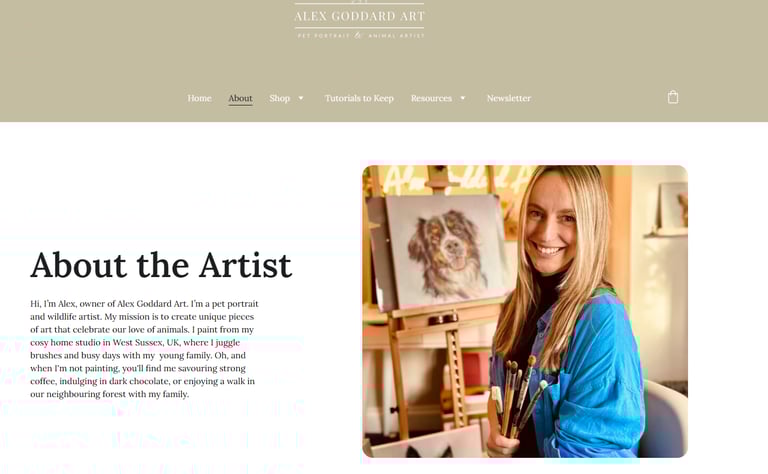
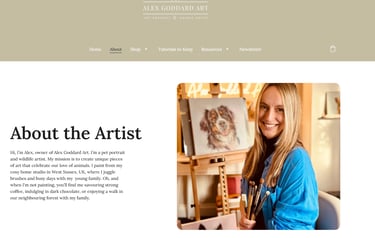
I have had an artists website for a few years now and last year I switched website host to Hostinger.
I made the switch to Hostinger because they made it easy to build a professional website without needing to code or spend a fortune. I used to be with Squarespace, that was lot a more expensive but with Hostinger you can get plans for just a few pounds or dollars a month.
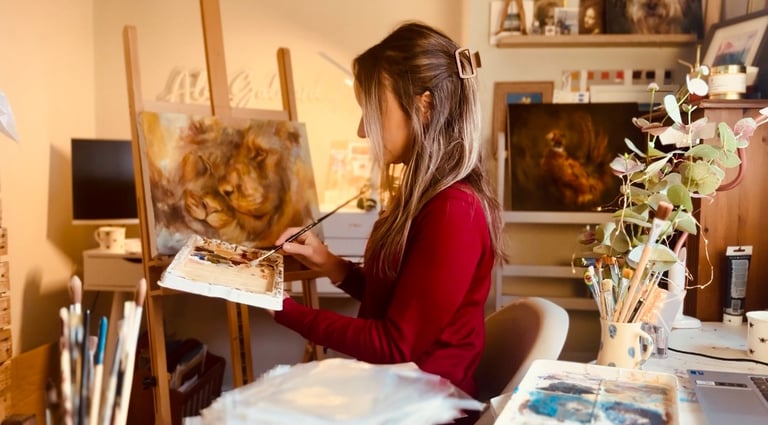
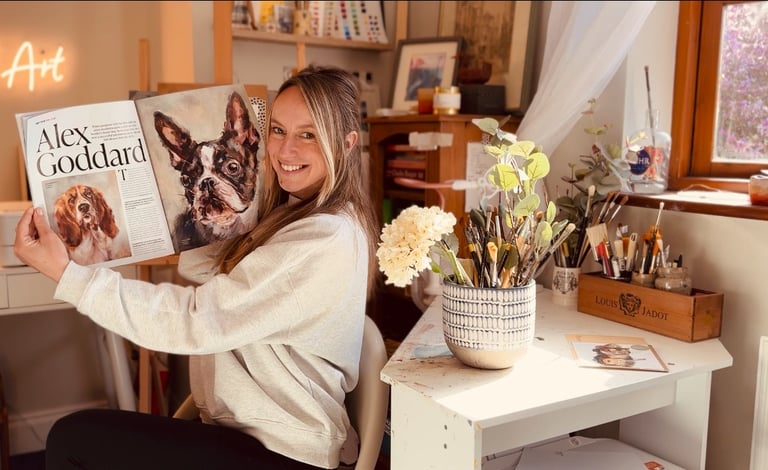
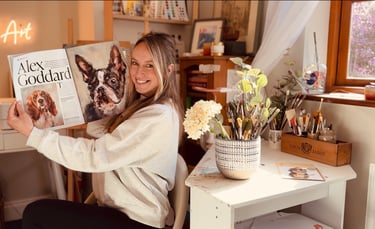
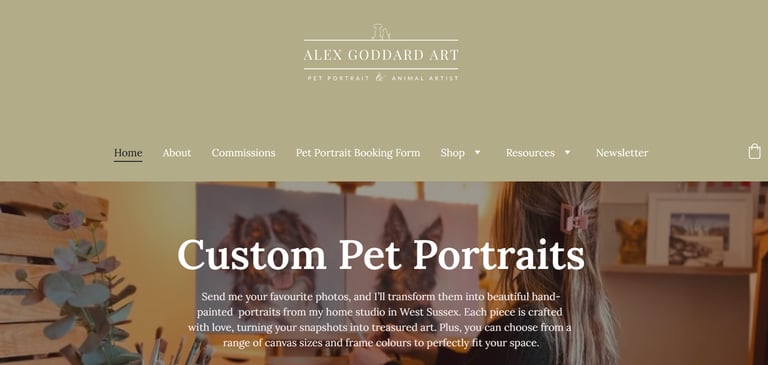
On my own website I include an About Me section that shares how I started as an artist, along with photos of me actually creating my work throughout the site (so there’s no denying that I made it by hand😊). I have my portfolio where I have a selection of artworks I have made, I also include the medium I use to create each piece.
Other ideas you can include on your website are photos of your workspace, images of you holding finished pieces, and in-progress shots to give people a real behind-the-scenes look at your process.
Hostinger also allows me to:
incorporate a shop where I sell my artwork,
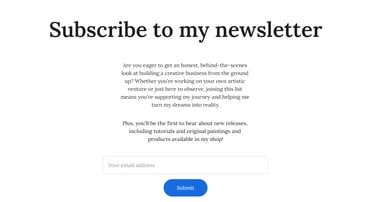
a newsletter subscriber sign up page which helps me connect even better to my audience,
and a blog where I can write articles and share my process and do all these more ‘human’ things.
If you’re interested in trying out Hostinger to set up your own personal artist website so buyers can better connect with you and your artist brand this is a great time to do it.
I personally recommend the Website Builder plan, because it lets you do everything I’ve mentioned that I use on my own site. I also have a discount code you can use at checkout to get an additional 10% off the plan price which is ALEXGODDARD.


One key thing to remember is that as fine artists we are not competing with AI, we need to shift our mindset to thinking that we are operating in a different category.
AI art by nature is fast content and in a world that’s getting faster every year, slowness is going to become a luxury and that is the different category that we should be putting ourselves in and leaning into more.
AI has made mass imagery less valuable. Anyone can create an AI image in seconds just by using a platform like Midjourney and I think for a lot of people the focus is already shifting. The artists who manage to survive this turbulent time will embrace the slowness, so the ones who:
make less work, but charge more (obviously you can charge a lot more for something that has been made by hand and taken longer to make than for a digital image that was made in a couple of seconds)
explain their processes well
and build deeper connections with their audience.
Instead of competing with AI we can lean into what makes our work different: the process of creating the piece, using storytelling, making something that has limited availability, and creating trust in where the work comes from.
2. The Mindset Shift
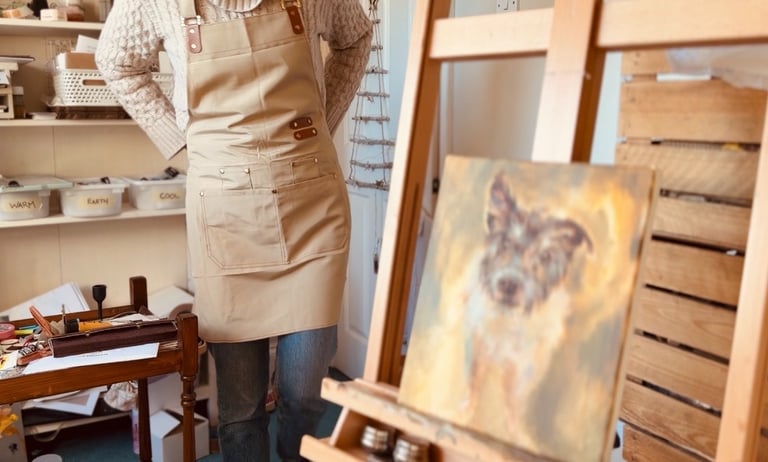
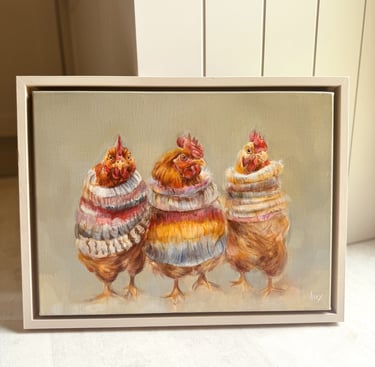
Recently, someone bought an original piece from me and they live in a small, picturesque village in Switzerland. That still amazes me. A single, physical artwork made by my hands now lives in a real place, with a real person, far from where it was created.
Moments like this feel like the opposite of mass-produced AI art. Instead of something made instantly and endlessly replicated, this is one original object with its own journey, story, and owner. It reminds me why making art slowly, carefully, and personally still matters.
I think a lot of art buyers will be increasingly looking and paying for this kind of experience and connection and our job is to help enable these kind of connections and moments to take place.
3. Lean Into Transparency
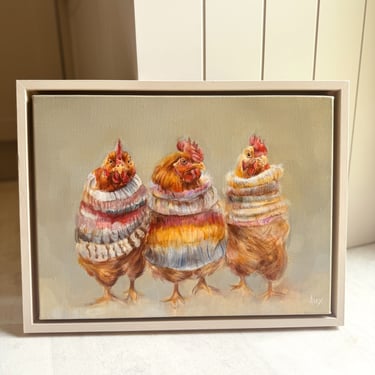
When listing your artwork for sale, it’s important to provide context that helps people understand. Include details like the materials you used, the time it took to create, whether it was done in the studio, plein air, or from perhaps a still life observation, the medium you chose, and any reasoning behind your choices.
For example, you might phrase it like this: “This painting was completed over three weeks using oil on linen, working from a still life set up in my kitchen.”
This is a bit harder for commission work because you are painting it because someone asked you too and it's quite often from reference photos but you could share what makes your commission process unique.
Your story will be completely different to another commission artist, so perhaps share what makes you different and what makes your style unique.
Scarcity creates value.
If I give you an example and this is non art related - during the pandemic in the UK there was a toilet roll shortage, as word got out more people rushed out to buy toilet roll to stock up. Toilet roll supplies started running out. Shops started selling them at inflated prices.
4. Create Scarcity on Purpose
AI thrives on abundance and floods the market with infinite images, so in this scenario it would makes sense that you win with limitation and selling finite bodies of work.
From a fine artist perspective think of limited print runs, one-off pieces and one of a kind signed physical works. When something can’t be endlessly reproduced, it becomes desirable again.
This all comes down to one thing: trust. Ask yourself—are people more likely to spend £800 on a painting if they don’t know who the artist is, where the artwork came from, or how it was made? Or are they more likely to buy when they’ve met the artist, felt a connection, and resonated with the story and intention behind the piece?
If you don’t want to do in person events or social media or Youtube then email lists are a great way to engage with your audience. I have a sign up page on my website and my email list has been growing slowly and steadily over time.
I try to send out my ‘Studio notes’ newsletter, once every couple of months to keep people up to date on what I've been up to in my studio and if I have any new artwork for sale.
Small engaged communities matter more in 2026 than going viral.
There are several online platforms that either do not accept AI-generated art or place strong restrictions on it. I’m going to run through some of these now.
With many of these platforms, it really helps to have your own website. Most require you to submit an application to sell your work, and during that process, they will likely ask if you have a website. Having one signals professionalism, credibility, and commitment, and it also provides a trusted place to verify your work, story, and track record.
6. Platforms for Fine Artists
The first thing I want to highlight is having your own website. This will obviously give you full control over what you sell. If you already have an audience that’s likely to visit your site and purchase your artwork, that’s fantastic — but many artists don’t have that built-in audience yet.
So next, I’m going to share a few options for platforms where you can sell your art and AI-generated work is either restricted or not accepted.
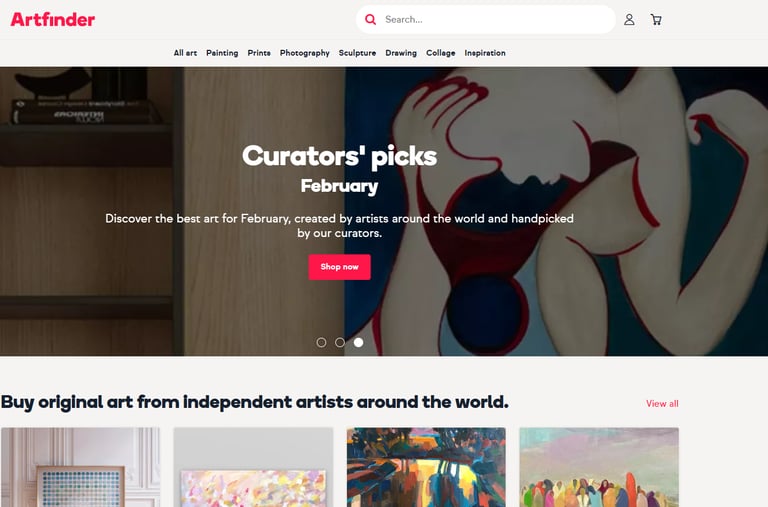
The first one is Artfinder and this selling platform really values how the work is made, not just the end result. Artfinder don’t allow the sale of any AI artwork or even artwork where they believe the reference images are made from AI imagery.
The application process requires you to provide clear human authorship, the way you make the art and the materials you use matter.
To be able to sell on Artfinder a personal artist website is recommended and often expected but if you have a strong social media account you could opt to use that instead.
The platform is extremely popular with art buyers around the world and if you're a commission artist they also have the option for you to sell your commissions through the platform so it’s a great one for pet portrait artists too.
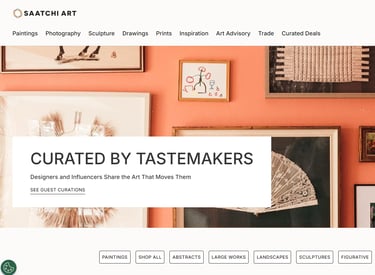
Saatchi Art is a large online art marketplace that allows you to sell your work directly with collectors around the world. It’s one of the best-known platforms for buying and selling original and affordable art online. You can set your own prices and Saatchi Art takes a commission on sales. They handle payments, customer service, and logistics support.
Saatchi Art does allow art that uses AI tools, but it does have limits on what is allowed. You cannot sell purely AI-generated artworks (i.e., pieces created entirely by an AI without significant human creative input).
For example you could use a reference photo that was created by AI, but the final piece must be worked on and developed by the artist’s own hand. If you use AI at any stage, you must disclose this in the artwork description.
The platform in general values artist narrative and buyers often skew toward collectors rather than decor shoppers so the whole idea of having an artist brand and a website helps here.
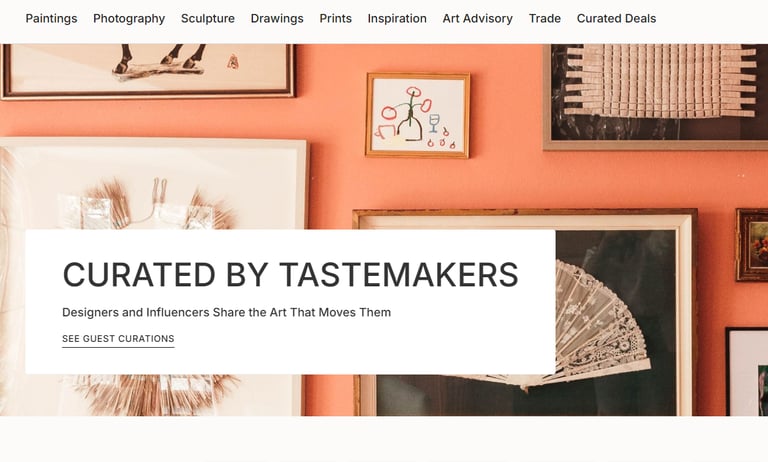
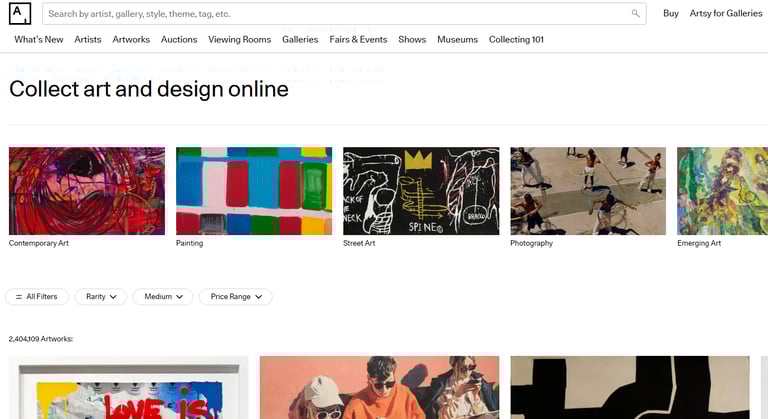
If you don’t want to sell your art directly yourself through a platform then Artsy is a great option. They work with galleries and you’ll need to be represented by an art gallery that has an Artsy account in order for your work to appear there.
This means galleries submit and manage your listings on Artsy, and enquiries and sales go through the gallery rather than an individual artist accounts. They will handle communication, pricing, invoicing, shipping, and any negotiation.
So if you want a fairly hands off approach this is a good one for you. Artsy do allow AI artwork but it largely depends on whether on not the individual galleries chooses to represent AI artists, so you have control to some extent by choosing a gallery to represent you that doesn’t sell AI artwork.
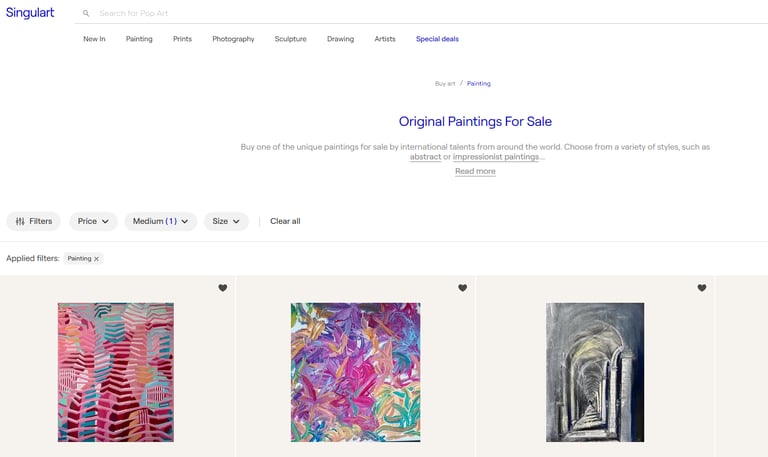
Singulart is another art marketplace where you can sell your art directly with collectors worldwide. It’s similar to Saatchi Art and they take a commission on sales (usually around 25–30%). Its slightly different from Saatchi they provide full support by handling payments, logistics, shipping, and customer service, which simplifies international sales for artists.
Singulart tends to be seen as a more curated, gallery-like online experience compared to broader marketplaces like Etsy, focusing on art collectors rather than mass-market buyers.
Singulart doesn’t currently publish a clear, public policy specifically about whether AI‑generated art is allowed or banned, so there’s no official statement like some platforms. What is clear from Singulart’s application process is that Artists must submit original work made by themselves, the platform emphasises quality and uniqueness in its selection process with a focus on originality so in my view mass made AI imagery would probably not get through the vetting process.
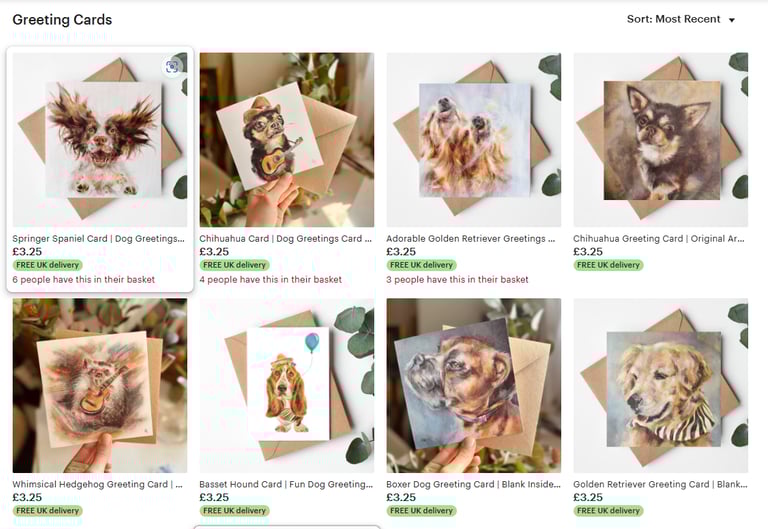
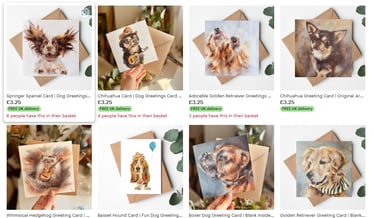
There’s a lot of AI-generated art on Etsy, but it’s important to note that AI usage must be clearly disclosed. If we start to see a shift back toward human-made artwork, this could influence shopper decisions on the platform.
Etsy’s Handmade category explicitly prohibits purely AI-generated art, and shops risk removal if AI is misrepresented in this category. Buyers can also filter specifically for handmade products and artwork, which matters if they care about authenticity. So, if there is a swing back to analogue, this could have a meaningful impact on sales and visibility.
7. Other Platforms
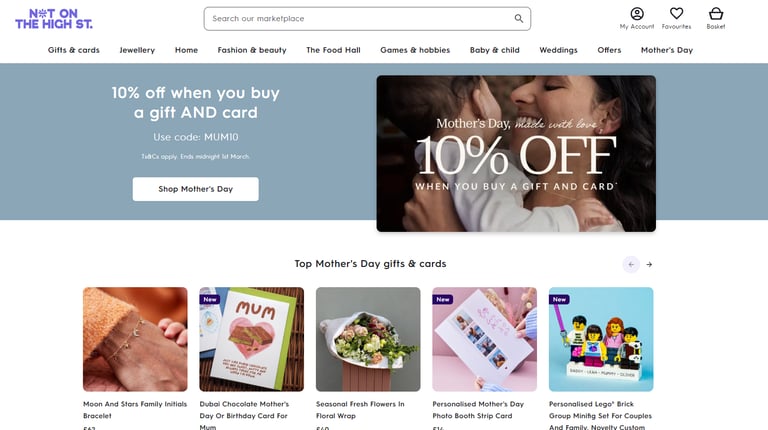
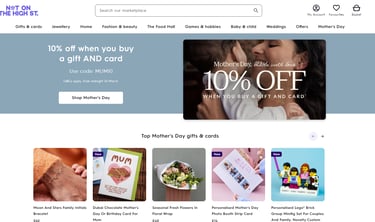
NOTHS is a British online marketplace that specialises in unique products from small independent makers and includes artwork. It’s known for promoting items that are handcrafted by individual sellers rather than mass‑produced goods.
They don’t publish a specific policy about selling AI‑generated artwork, but they are a platform for handmade work with a rigorous seller approval process so AI‑generated works could be problematic if it is misrepresented as handmade.
1. Build a ‘Human Artist’ Brand
5. Build Relationships
One of the most important things we can do to sell our work today is build genuine relationships with buyers and collectors. That might mean showing your face more—if you’re comfortable with that—through something like a YouTube channel.
But there are also plenty of effective, faceless ways to promote your art. I see many artists who never show their face yet consistently share their work, their process, and the story behind what they create.
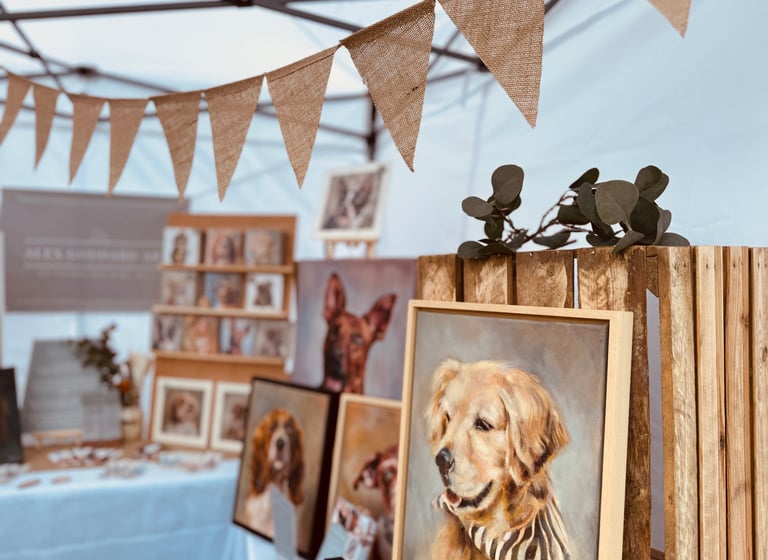
Now this is a blog about selling art online but thought I would mention in-person opportunities are also a great way to build relationships, like art fairs and events where people can meet the artist behind the work. Use these as an opportunity for a customer to remember you, get to know more about you, to want to explore more of your work, to want to purchase from you.
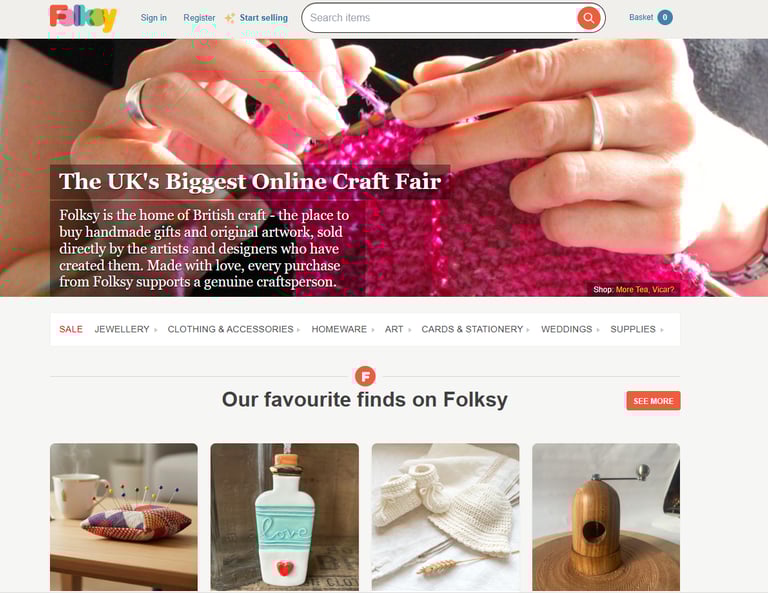
Folksy is another UK‑based online marketplace specifically for handmade, original art, craft, and design and its focused on artists and makers who create their own work rather than sell mass‑produced items. To sell on Folksy you must personally make or design the items you list.
Their rules explicitly state that artwork generated using AI is not allowed on the platform and they will remove listings if they suspect them to be made with AI. So if you’re looking for an alternate to Etsy and you’re based in the UK this could be a good platform for you to research.
I wanted to mention one more platform which isn’t a selling platform. It's more of a rival to Instagram and that is CARA, which is an acronym for the Council of At Risk Academics. It is a social network and portfolio platform specifically built for artists and creatives designed to help share and discover work. CARA has a strict no–AI‑generated art policy. The platform does not allow AI‑generated images and they aim to filter out AI content to help prioritise human‑made work. They have AI detection tools that automatically filter and block AI images from being uploaded. It one of the few spaces specifically dedicated to only human‑created art.
8. Final Thoughts
If you want to avoid AI art spaces entirely, choosing marketplaces that have a clear policy of not accepting AI art like Artfinder are the best fit for you.
With the majority of these selling platforms I have talked about you do have to go through an application process where you will be asked questions to make sure you made or own the artwork, why you make it and how you made it, what kind of medium you used. So ensuring that you have these narratives round your artwork will be beneficial to you.
2026 is being described as an analogue year, marking a cultural swing back toward the physical and the slow. People are predicted to actively seek experiences that feel real — from paper books and handwriting to in-person gatherings — anything that reconnects them with something tangible and authentic
What this means for artists: now more than ever, collectors are looking for human connection in the work they buy. Having your own website is essential — it’s the space where you can tell your story, show your process, and make that personal connection with buyers. Your website is a trust-building tool that proves your work is genuinely yours and human-made.
Good luck!


Having Your Own Website
Artfinder