How to Make £1,000 a Month in Passive Art Income
ART BUSINESS TIPS
1/16/202611 min read
I’m a big believer in creating passive income streams as an artist. I hear so many artists talk about feeling burnt out from trying to do everything at once. Many dream of going full-time but worry about the financial pressure.
My goal is to generate around £1,000 a month in passive income from my art business and this is from setting up 5 (at a push 6) passive revenue streams. In this blog post, I’m going to walk you through the passive income streams I currently have, and how these are contributing to my target of £1,000 per month.

These income streams don’t include more active revenue sources like selling original paintings or taking on commissions.
If your art business relies only on those, then unless you’re charging a high price per piece, the pressure to constantly produce can be intense. And if you have a slow month with no sales, it can be stressful—especially when you depend on that income to pay the bills. That stress can quickly contribute to burnout.


One important thing to say before we begin: there’s really no such thing as passive income right from the start. Every stream requires some upfront work — some more time-intensive than others — but I promise there’s no better feeling than putting in that effort and then seeing income come in month after month.
My personal experience has shown that it takes a lot of time to start and build these passive income streams but my main goal is to grow then slowly and sustainably over a longer period of time. As I mention quite often I have a young family so that’s my main priority in life, one day they’ll be older and I'll have more time on my hands and hopefully by that point my passive income streams will still be ticking along nicely in the background.
Individually, none of these streams make huge amounts of money, but when you add them all together, they create a modest monthly income that helps with paying the bills.

And finally, a quick tip before we begin is start with a clear goal. For example, if your aim is £1,000 a month in passive income, think about how many streams you want to focus on.
If it’s two streams, you’re aiming for £500 from each. If it’s four, that’s £250 each. It won’t always be an exact split — some streams will naturally earn more than others — but it’s a great way to set realistic, achievable targets.
Let’s get into it.
My first passive income stream is print on demand.
Selling products featuring your artwork through print on demand is a great way to build passive income and generate recurring art sales with very little ongoing time investment. Once everything is set up, whichever print-on-demand partner you choose they handle all the printing and shipping for you.
When most people think of print on demand, they usually think of T-shirts or clothing, but you can also create wall art like canvas prints for example and also greeting cards. I am able to sell print-on-demand products directly through my own website that is hosted with Hostinger.
Hostinger's print-on-demand partner is Printful, and the setup is incredibly straightforward. You can launch a store in minutes, sell your products worldwide, and let Printful handle everything — no inventory, no packaging, and no shipping to worry about. I’ve created a whole video about how you can do this which you can watch here.
Print on Demand
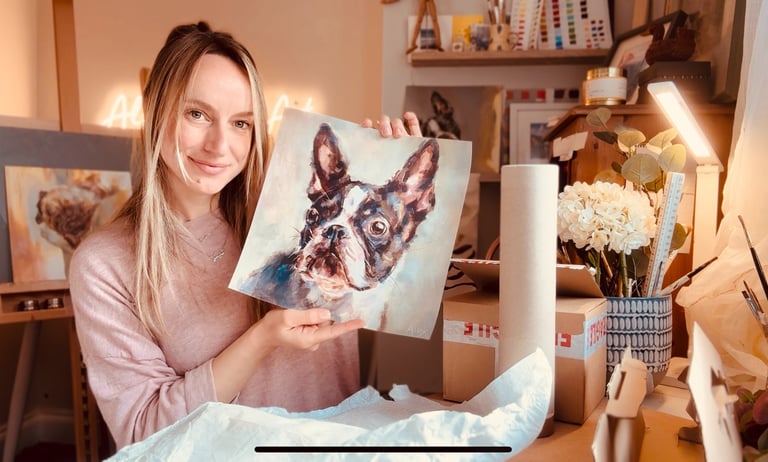

To give you a worked example: a Printful 11” x 14” canvas print might cost around £30 for printing and shipping. If you sell that print for £50, you’d make £20 profit per sale. Because Hostinger doesn’t take any commission, you keep that full profit (apart from a tiny transaction fee from the payment provider). To reach £200 per month, you’d need to sell around 10 canvas prints.
I haven’t included taxes here, and your production or shipping costs may vary depending on where you live or where you’re shipping to — this is just to give you an idea of how you can set realistic targets.
If you’re interested in trying out Hostinger for yourself I’d recommend the Business Website Builder plan, as it gives you everything you need to create and grow an online store, including the print-on-demand feature and they are super affordable with plans starting from just a few pounds per month.


Selling Digital Products
Digital products for artists are creative items made and sold in digital form over and over again there is no physical item or shipping involved which means that once its set up its passive. They can be downloaded or accessed online.
Some digital product ideas you could sell as a fine artist include:
printable templates that people are able to print themselves so things like planners, journals, or calendars featuring your artwork;
PDF art guides or mini eBooks that break down your painting process;
art fair or exhibition planning checklists;
art business guides covering things like pricing, selling, and marketing your work.
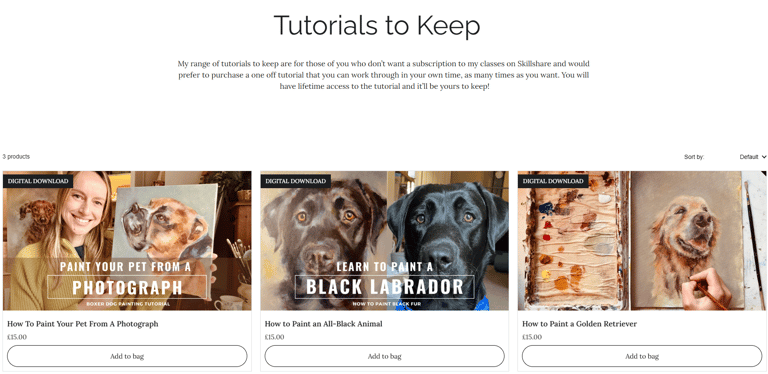
Personally, I sell step-by-step painting tutorials through my website. These are offered as digital downloads, which means customers pay a one-off fee and get lifetime access to the tutorial. As I mentioned earlier, I host my website with Hostinger, and they make it really easy to sell digital downloads directly through your online shop.
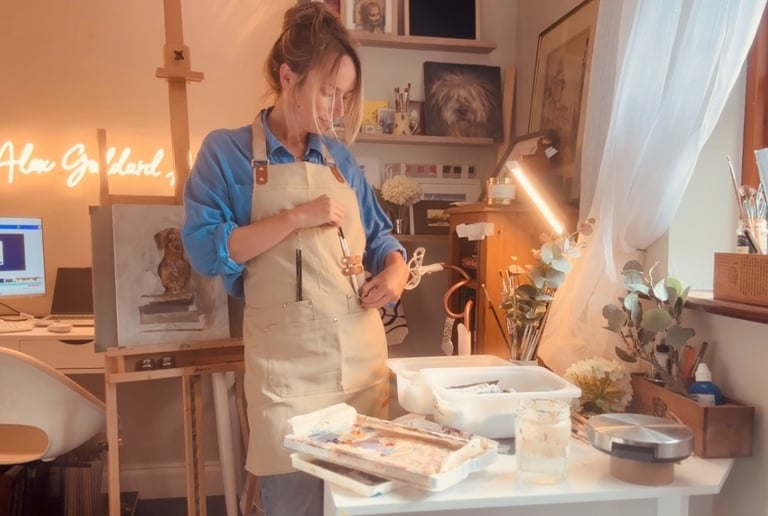

My process is fairly simple. I create the video tutorials using Canva, then upload them to a folder in my Google Drive. From there, I generate a shareable link, which I use for the digital download product listing on my website.
This is probably my most time-intensive passive income stream upfront, but it’s also one of the most satisfying once everything is set up. It’s something you can continue building on over time as well. At the moment, I have three tutorials available on my website, but there’s plenty of scope to add many more in the future.
To give you another worked example: if I currently sell three tutorials at £15 each, I’d need to sell around 14 tutorials per month to hit my £200 monthly target for this income stream.
With this type of product, you do need to invest some ongoing time in marketing, which I’d class as active work each month. That might be through social media, Pinterest, YouTube, or simple word of mouth. Alternatively, you could use an online teaching platform that requires less hands-on marketing — which brings me nicely on to passive income stream number three.
Teaching on Skillshare
I also share my art tutorials on Skillshare which is an online teaching platform. There are several other platforms similar to Skillshare including Udemy, Domestika, and CreativeLive and these platforms are great because they help promote your courses by recommending them to users or showing your classes in search results.
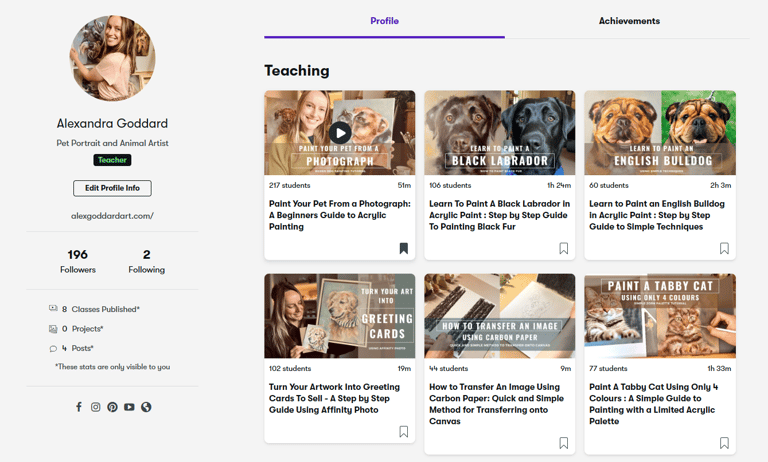
With these types of platforms, you’ll generally earn less per hour of watch time compared to selling your tutorials directly.
Ultimately, it depends on how well your tutorials perform on the platforms. On Skillshare, for instance, there’s potential to earn more per minute of watch time if your classes consistently receive strong feedback and high ratings.
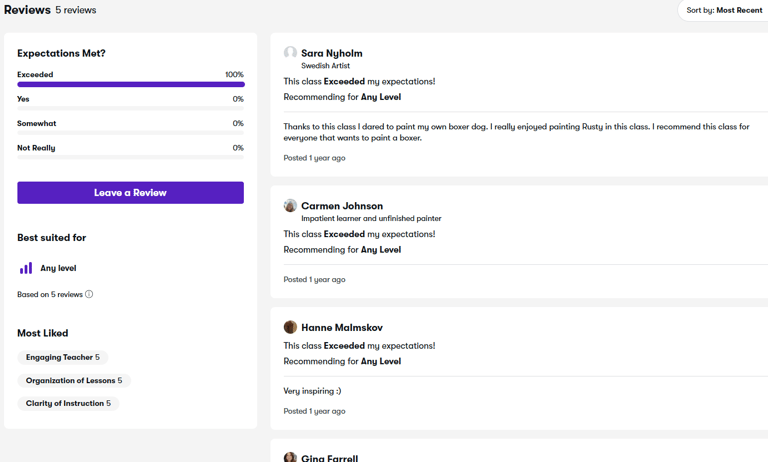
There are also platforms designed for live teaching, including Teachable, Thinkific, Kajabi, and LearnWorlds, although with these you typically need to drive most of the traffic yourself.
There are also community-based platforms like Patreon, but those tend to be more active income streams, as they require consistent ongoing content and engagement.
Affiliate Marketing
Affiliate marketing can be a great passive income stream for artists because it allows you to earn money simply by recommending tools, materials, or services you already use and love.
Again this is a passive income stream where you have to put in the initial work upfront to reap the benefits later on. You have to decide where you want to put your affiliate links, so it’s a good idea to have a little brainstorm first. A website or a blog is a great idea to incorporate links organically and naturally.
You might have a Pinterest account that does really well or a YouTube channel where you could also include the links in the video descriptions. The important thing with affiliate marketing is that you have an audience that you can share recommendations with.
If you're keen to get started with affiliate marketing you need to think where your most engaged audience currently is and that’s the best place to start in my opinion. I include most of my affiliate links throughout my blog and in the descriptions of my YouTube videos.


By sharing affiliate links with your audience you can earn a commission whenever someone makes a purchase through your link.
Once the content is created and the links are in place, they can continue generating income long term with little ongoing effort, especially if your content attracts consistent traffic.
The key to this is creating Evergreen content that will still be relevant in a year or two years from now. If people are still consuming your content because its still relevant then they have the potential to see these affiliate links well into the future.
Don’t forget to check your links though to make sure they still work as products can get discontinued and you don’t want to be sharing broken links.
To track how much you earn each month through affiliate links, you’ll need to register with the relevant affiliate programme. When you sign up, you’ll be given an account—Amazon Associates is a good example of this. Through your account dashboard, you can monitor your performance, including how many clicks your links receive, how many of those clicks result in purchases, and how much commission you’ve earned. Most affiliate programmes require you to reach a minimum earnings threshold before you’re paid, so if you don’t meet it in a given month, your earnings will roll over until you do.
AdSense on YouTube
For those who may not know, to earn money through YouTube's AdSense programme - where ads are placed on your videos and you’re paid based on how many people view those ads - you currently need a minimum of 1,000 subscribers and over 4,000 hours of watch time within a 12-month period.
Passive income from AdSense on YouTube is a great idea because once your videos are uploaded and start gaining views, they can continue earning revenue without you needing to constantly create new content.
This one I would say from my experience was the most labour intensive to achieve. Getting monetized can take a considerable amount of time and effort. However one of the benefits once you are monetized is that YouTube handles all the ad placement and payments, so it’s a relatively hands-off way from that respect.
As long as your videos remain relevant, searchable, and engaging, they can generate ad income for months or even years. This allows you to build a library of videos that work for you in the background while you focus on creating new content or other projects.
Once you are monetized, on your YouTube Studio account you have an 'Earn' page which ticks upwards with the amount you are earning per day.
It’s always useful to check in occasionally and see how much AdSense revenue is coming in. For me personally, it’s a fairly modest amount—usually only one or two pounds a day when I haven’t uploaded anything recently. After I upload a video, earnings tend to be higher for a few days, but I wouldn’t consider that boost to be completely passive income, as it usually follows a significant amount of work put into creating the video.
Starting a Blog
An art blog can become a source of passive income by turning content into opportunities that you’re able to monetise. The key to a blog is to be consistent and provide value to your audience. Some ideas on what to include in an art blog could be sharing tutorials, product reviews, or sharing you’re knowledge and experience as an artist, there really is so many things you could write about.
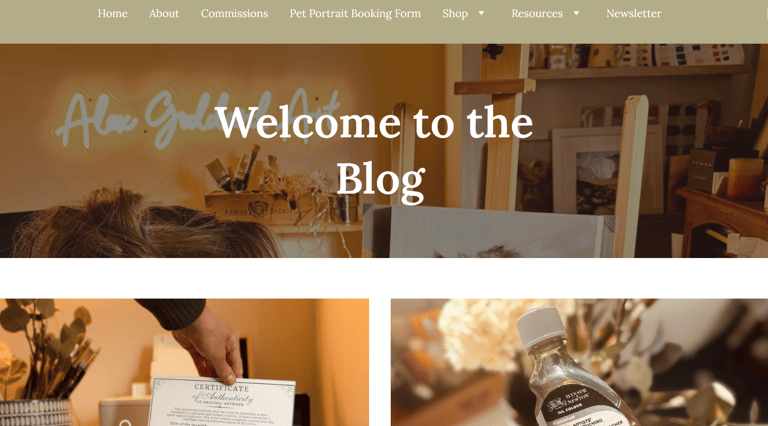
Once readers start engaging with your blog regularly, it can generate income in a number of different ways. Here are a few examples:
You can incorporate links to products you’ve created yourself, such as digital products. For example, if you write a blog post about a painting tutorial, you could include a link to a downloadable tutorial available on your website.
You could also write posts that feature your artwork. A blog post about wall art for animal lovers, for instance, could include links to your original pieces or prints for sale on your website.
Selling digital products is another option, such as printable artwork or e-books that complement your blog content.
Your blog can also be used to support monetisation on other platforms by driving traffic to your YouTube videos or, if you have one, your podcast episodes.
If you write scripts for YouTube videos, you can repurpose them into blog posts and include a link to the corresponding video. This helps bring more traffic to your videos, where additional AdSense revenue can be generated.
Although this isn’t something I’ve done yet, you could also consider monetising your blog through display ads or sponsored content. I go into more detail on this in my video about how to start a blog.

Art Licensing
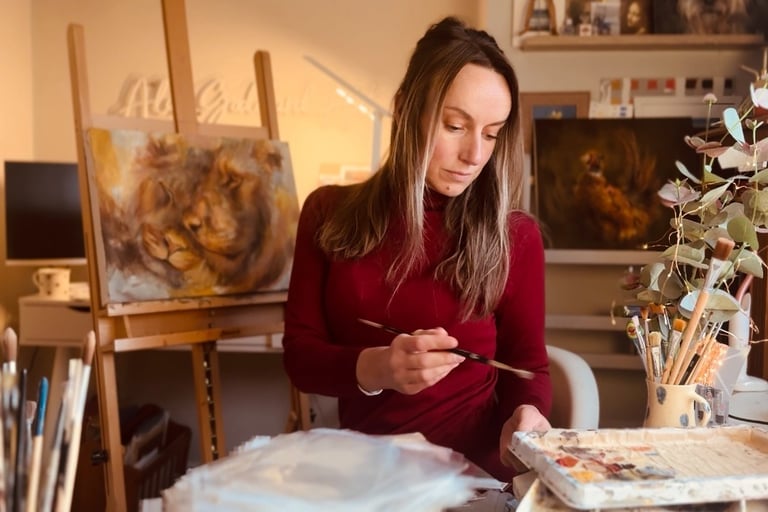
Art licensing is something I haven’t tried yet but its definitely on my radar for the future.
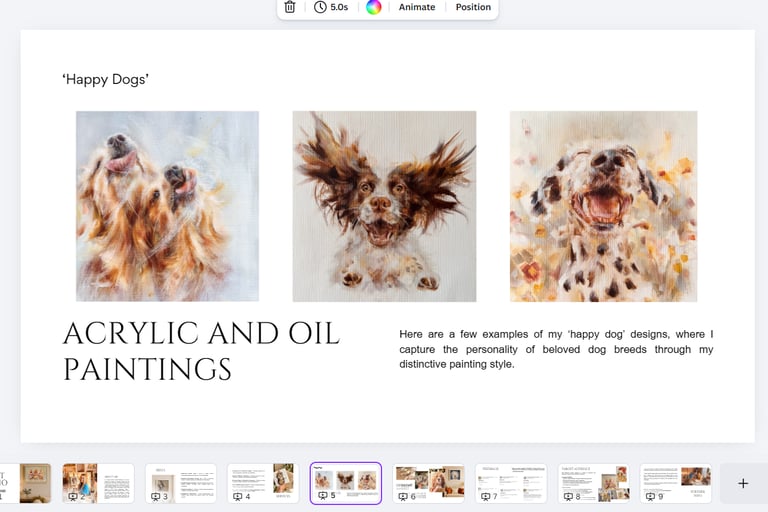
Art licensing is when artists give companies permission to use their artwork on products for a fee, allowing them to earn passive income through royalties without having to constantly create new pieces.
From the research I’ve done so far, it helps to have a strong, recognizable style and a fairly large body of work. It’s also important to create a portfolio you can send out and think carefully about where your artwork would fit best. For example, if your designs suit greeting cards, you can research companies that license artwork for card retailers, or if your art would work well on homeware like plates or mugs, you can look into brands that specialize in tableware.
Within your portfolio show how your artwork would suit the types of products that the brand sells or you could reach out to art licensing companies who sort of act like the middle man and find brands on your behalf. Just be aware if you go down this route you may make slightly less on a deal than if you approached businesses directly.
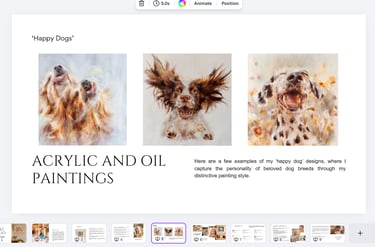
There are also lots of great places to find tips and discover companies who license artwork, such as art licensing blogs, YouTube channels, creative business podcasts, artist communities on social media and even dedicated art licensing fairs and trade shows, which can help you learn more and connect with potential licensing partners.
Final Thoughts
Hopefully this has given you some insight into the kinds of passive income options available to fine artists and helped you think about which ones you might like to explore.
Each of these has required a lot of work upfront. Don’t be misled by all the hype out there — it’s not easy, and it’s definitely not a get-rich-quick situation. In my experience, it takes time, research, and commitment. But I’m finally starting to see the results of that effort, and it’s incredibly rewarding.
It has also freed up a bit more time for me to focus on other creative projects. It’s taken me two years to get to this point, and my earnings are still fairly modest, but I think that gives a more realistic picture of what can be achieved over a longer timeframe.
Thanks so much for reading!